Begin with significance, not finish
A sensitive restoration starts by establishing why a building matters. Significance might lie in an early structural frame, an unusual plan, a sequence of interiors, an association with estate life or a setting that still explains the lodge's purpose. Not every element carries equal weight. A later extension can be important, while an apparently ancient decorative feature may be a comparatively recent addition.
For a traveller, the practical test is whether the property's account distinguishes these layers. “Restored to former glory” is an attractive phrase, but it does not explain which period was selected, what evidence supported the work or what was lost. A clear project description may acknowledge compromises. That openness is usually more useful than a claim that the building has been returned to an entirely original state.
Conservation organisations offer a vocabulary for these distinctions. The Society for the Protection of Ancient Buildings emphasises informed care of old fabric. Historic England publishes guidance on adapting historic buildings, including energy efficiency and access. Historic Environment Scotland offers related advice within Scotland's own legal and environmental context. These are reference points, not certificates of quality for every hotel using heritage language.
Repair is different from replacement
Look closely at repeated elements: windows, doors, floorboards and roof coverings. Repair may retain irregularity, local wear and evidence of earlier craftsmanship. Replacement may be necessary where deterioration is severe, but it changes the balance between inherited material and new work. The appearance of age alone cannot settle whether the decision was appropriate.
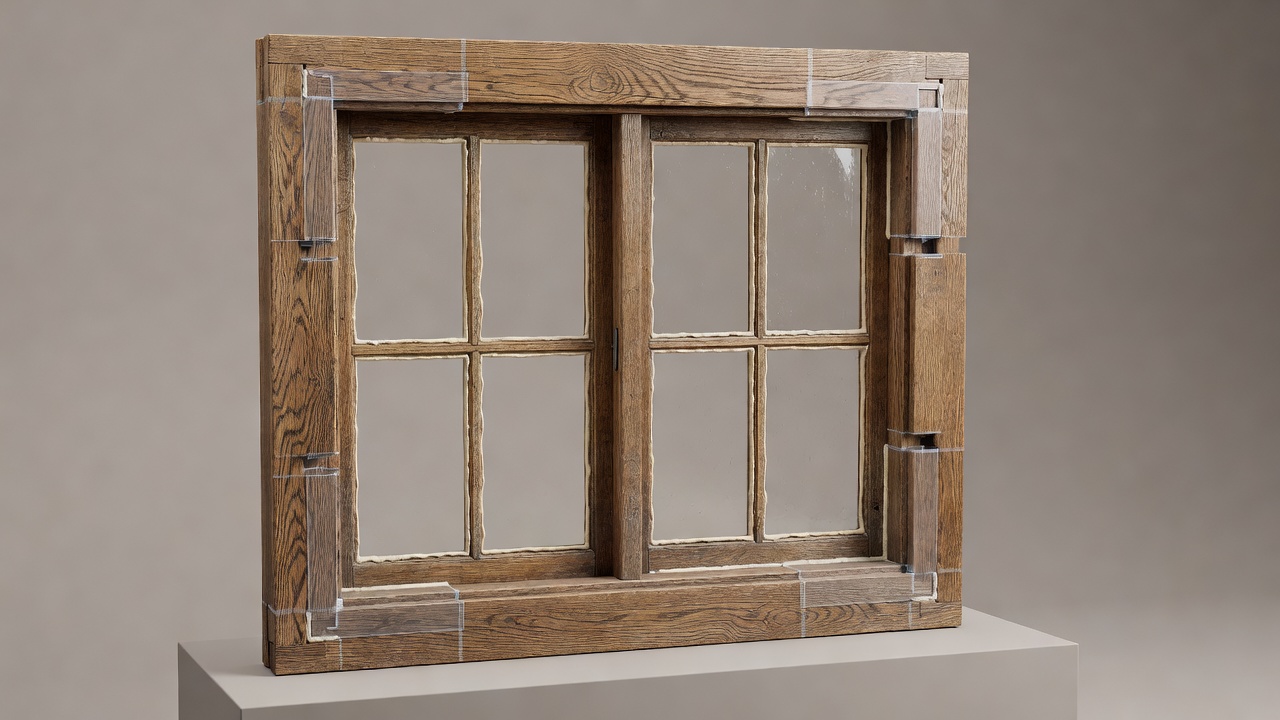
Windows make this especially clear. An old frame can contribute to a façade's proportions and the interior's depth of light. Improved comfort may involve careful repair, draught reduction, secondary glazing or other measures suited to the building. The right approach depends on significance, condition, climate and consent requirements. There is no universal instruction to retain or replace every window.
Materials also work as systems. Historic masonry can behave differently from a modern sealed wall. Moisture, ventilation and heating must be considered together rather than treated as separate cosmetic problems. Guests do not need to become building physicists, but they should be cautious about restoration stories that discuss only finishes while ignoring the building's ongoing maintenance.
The essential work you may not see
A working hotel needs safe escape routes, fire detection, electrical services, drainage, ventilation and spaces for staff to operate. These systems can be difficult to introduce into rooms with protected ceilings or narrow circulation. The question is how carefully the routes and equipment have been coordinated, not whether a historic building can somehow function without them.
Accessibility deserves the same seriousness. A discreet entrance is not automatically a dignified one, and a lift alone does not establish an accessible stay. Consider the complete journey from arrival to bedroom, bathroom, dining room and outdoor space. Thoughtful adaptation can improve this journey without pretending that all historical constraints have vanished. Specific access information is stronger evidence than a general promise of inclusivity.
The Venice Charter, associated with ICOMOS, and the Australia ICOMOS Burra Charter are useful conceptual references for conservation and cultural significance. They are not interchangeable with local planning law, and the Burra Charter is not a European statutory code. Their value here is in encouraging evidence, respect for significant fabric and a disciplined explanation of change.
Compare decisions, not decorative styles
| Element | Useful evidence | A question to ask |
|---|---|---|
| Historic windows | Repair scope and comfort measures | What was retained, and how is ventilation managed? |
| New guest wing | Clear location and architectural description | How does it connect to the historic building? |
| Access route | Measurements, surfaces and level changes | Can the full guest journey be completed independently? |
| Interior decoration | Distinction between surviving and introduced work | Which features are documented originals? |
Schloss Kranichstein and Schloss Fuschl provide real settings in which to think about inherited architecture and present hospitality. Wald & Schlosshotel Friedrichsruhe, associated with a former hunting lodge, offers another example of a historic nucleus within a broader hotel environment. Do not assume that every bedroom occupies the oldest structure. Read the operator's accommodation descriptions and ask where your proposed room sits.
A good restoration remains a process after opening. Roofs need inspection, timber needs care and services eventually need renewal. The building's hotel life can support that maintenance, but commercial use does not automatically guarantee conservation success. Look for a credible relationship between the inherited structure and its new workload. The strongest impression is often one of continuity: the building is being used differently, yet its important relationships remain understandable.
Conservation references
- Society for the Protection of Ancient Buildings
- Historic England — advice and guidance
- Historic Environment Scotland — advice and support
- ICOMOS — international conservation principles, including the Venice Charter
- Australia ICOMOS — Burra Charter and practice notes
- Wald & Schlosshotel Friedrichsruhe — property context